


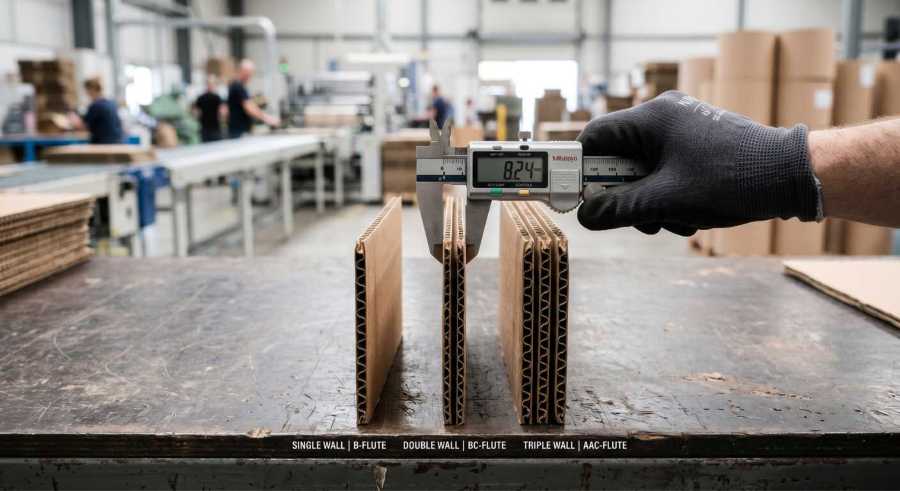
Introduction to Corrugated Box Thickness
In the highly competitive landscape of B2B packaging and logistics, the structural integrity of your shipping materials can make or break your supply chain. For businesses operating in Egypt and the broader Middle East, selecting the correct corrugated box thickness is not merely a matter of packaging—it is a critical logistical decision that impacts shipping costs, product safety, and ultimately, brand reputation. Whether you are exporting fresh agricultural produce from Cairo to Europe, or distributing heavy automotive parts across the GCC, understanding the nuances of corrugated board specifications is paramount.
At International Packing and Service Company (IPSC), we frequently see procurement managers making the critical error of either over-packaging, which leads to exorbitant shipping and material costs, or under-packaging, which results in devastating product damage during transit. This comprehensive guide will delve deep into the science of corrugated box thickness, exploring the various flute profiles, wall structures, and how to precisely match your packaging specifications to your product's unique demands.
Understanding Corrugated Cardboard Anatomy
To make an informed decision regarding box thickness, one must first understand the fundamental anatomy of corrugated cardboard. Unlike standard folding carton (which is a single sheet of thick paper pulp used for cereal boxes), corrugated board is an engineered material. It consists of three primary components: an inside liner, an outside liner, and the fluting—the ruffled shape placed between the two liners.
The fluting is the heart of the corrugated box. It provides the structural strength, the rigidity, and the shock-absorbing properties necessary for safe transport. The liners, typically made from Kraft or Testliner paper, provide the flat surfaces for printing and further structural support. The combination of these elements, bonded together with industrial starch-based adhesives, creates a material that boasts an exceptional strength-to-weight ratio.
Decoding Flute Profiles: The Alphabet of Packaging
The thickness of a corrugated box is primarily determined by its 'flute profile'. Flutes are categorized by letters, which historically indicate the order in which they were invented, rather than their relative sizes. Here is a detailed breakdown of the standard flute profiles utilized in carton manufacturing:
A-Flute (Approx. 5mm thickness)
A-Flute is the original corrugated flute design. It features the largest arch size, providing excellent cushioning properties for fragile products. Because of its thickness, it offers superior stacking strength (measured as Box Compression Test or BCT). It is commonly used for packaging fragile items, electronic components, and products requiring substantial shock absorption. However, its large profile means fewer boxes can be stored on a pallet before assembly, impacting warehousing efficiency.
B-Flute (Approx. 3.2mm thickness)
B-Flute was developed as a more robust alternative for packaging heavy items like canned goods. It has lower arch heights and more flutes per linear foot than A-Flute, making it much more resistant to flat crush (crushing of the flutes themselves). It provides a rigid, flat surface that is highly suitable for high-quality printing and die-cutting. B-Flute is exceptionally versatile and is a staple in the FMCG (Fast-Moving Consumer Goods) sector.
C-Flute (Approx. 4mm thickness)
C-Flute is the undisputed workhorse of the corrugated packaging industry, accounting for an estimated 80% of all corrugated boxes manufactured globally. It offers an optimal balance between the cushioning properties of A-Flute and the crush resistance of B-Flute. It is the standard choice for general shipping boxes (RSC - Regular Slotted Cartons), furniture packaging, and agricultural exports. If you are unsure which flute to choose, C-Flute is often the safest starting point.
E-Flute (Approx. 1.6mm thickness)
E-Flute is a micro-flute that is exceptionally thin. What it lacks in cushioning, it makes up for in structural rigidity and an incredibly smooth surface. This makes E-Flute the premium choice for retail-ready packaging, cosmetics, consumer electronics, and pizza boxes. It is designed to replace solid folding cartons where extra strength is needed without adding bulk. Its thin profile also maximizes warehouse space.
F-Flute (Approx. 0.8mm thickness)
F-Flute is a half-size E-flute. It is predominantly used in the fast-food industry and for premium retail packaging where high-end graphic printing is required. It provides a solid feel to the packaging while utilizing minimal material.
Wall Types: Single, Double, and Triple
Beyond the flute profile, the thickness and strength of a corrugated box are dictated by the number of walls. This refers to how many layers of fluting and liners are combined.
Single Wall Corrugated Board
As the most common type of corrugated board, single wall consists of one layer of fluted paper sandwiched between an inner and outer liner. It is available in all flute profiles (A, B, C, E, F). Single wall boxes are ideal for standard shipping and storage of lightweight to medium-weight products. They are cost-effective and provide adequate protection for e-commerce deliveries and standard B2B shipments.
Double Wall Corrugated Board
When single wall board is insufficient, double wall steps in. This configuration consists of two layers of fluting separated by an intermediate liner, sandwiched between two outer liners (totaling five layers of paper). Double wall board typically combines two different flute profiles, such as BC-Flute or EB-Flute. The combination leverages the specific strengths of each flute type (e.g., the cushioning of C-Flute with the printability and crush resistance of B-Flute). Double wall boxes are essential for heavy industrial parts, large appliances, automotive components, and bulk agricultural exports from the Middle East, offering exceptional stacking strength for long-haul transport.
Triple Wall Corrugated Board
Triple wall is the strongest commercially available corrugated board. It comprises three layers of fluting and four liners. This heavy-duty packaging is designed to replace wooden crates in industrial shipping. It is used for massive, heavy equipment, hazardous materials, and large-scale bulk bins. Triple wall is highly specialized and significantly more expensive, but its strength is unparalleled.
Evaluating Your Packaging Requirements
Selecting the right thickness requires a holistic evaluation of your product and your supply chain. Consider the following critical factors:
- Product Weight: This is the most immediate determining factor. A 5kg product can easily ship in a single wall C-Flute box. A 30kg machine part demands a double wall BC-Flute box to prevent the bottom from giving out.
- Fragility: Highly fragile items require the superior cushioning of A-Flute or custom corrugated inserts, regardless of their weight.
- Stacking Duration and Height: If your products will sit in a warehouse in Egypt during the hot, humid summer months stacked five pallets high, you need high BCT (Box Compression Test) ratings. Humidity significantly degrades paper strength. A double wall box with heavy-duty Kraft liners is recommended for long-term, high-stack storage.
- Shipping Mode: Domestic truck delivery has different requirements than international maritime shipping. Exporting goods requires packaging that can withstand prolonged vibration, dramatic temperature fluctuations, and multiple handling touchpoints.
- Cost Restrictions: While a double wall box offers more protection, it uses more material and costs more. It also takes up more space on a pallet, increasing freight costs. The goal is to find the exact threshold where the product is fully protected without paying for unnecessary material.
Quality Testing Metrics: ECT vs. Mullen
When communicating with carton manufacturers in the Middle East, like IPSC, you will encounter two primary testing standards that dictate board strength, which is directly related to thickness and paper grade.
The Mullen Burst Test: This older standard measures the force required to rupture or puncture the face of the corrugated board. It is a good indicator of how the box will handle rough internal handling and impacts. It is measured in pounds per square inch (e.g., 200# test).
Edge Crush Test (ECT): ECT has become the modern standard, particularly for businesses that palletize their shipments. It measures the top-to-bottom compression strength of the board (how much weight the edges can support before buckling). It is expressed as a value, such as 32 ECT. A 32 ECT single wall box is often used as a substitute for a 200# Mullen test box, but it focuses on stacking strength rather than puncture resistance.
Conclusion
Choosing the right corrugated box thickness is a calculated engineering decision. For manufacturers and distributors in Egypt and the Middle East, optimizing your carton specifications—balancing flute types, wall structures, and paper grades—is a direct path to reducing operational costs and ensuring your products arrive in pristine condition.
Partnering with an experienced local carton manufacturer who understands regional supply chain challenges, such as IPSC, is the most effective way to secure the ideal packaging solution for your B2B enterprise. Stop overpaying for inadequate packaging; contact International Packing and Service Company (IPSC) today for a custom corrugated analysis and a direct quote.
Comprehensive FAQ on Box Thickness
Q: Can I use single wall board for international shipping? A: Yes, but only for lightweight, non-fragile items, and it is highly recommended to use premium Kraft liners to withstand varying humidity levels during maritime transit.
Q: Does the paper quality matter as much as the thickness? A: Absolutely. A single wall box made with heavy-duty virgin Kraft paper can sometimes outperform a double wall box made with low-grade recycled Testliner. Thickness must be evaluated alongside paper GSM (Grams per Square Meter).
Q: How does humidity in the Middle East affect box thickness choices? A: High humidity weakens paper fibers, reducing stacking strength by up to 50%. If shipping or storing in high-humidity areas without climate control, upgrading to a thicker board (e.g., double wall) or using moisture-resistant coatings is highly advisable to maintain structural integrity.
