


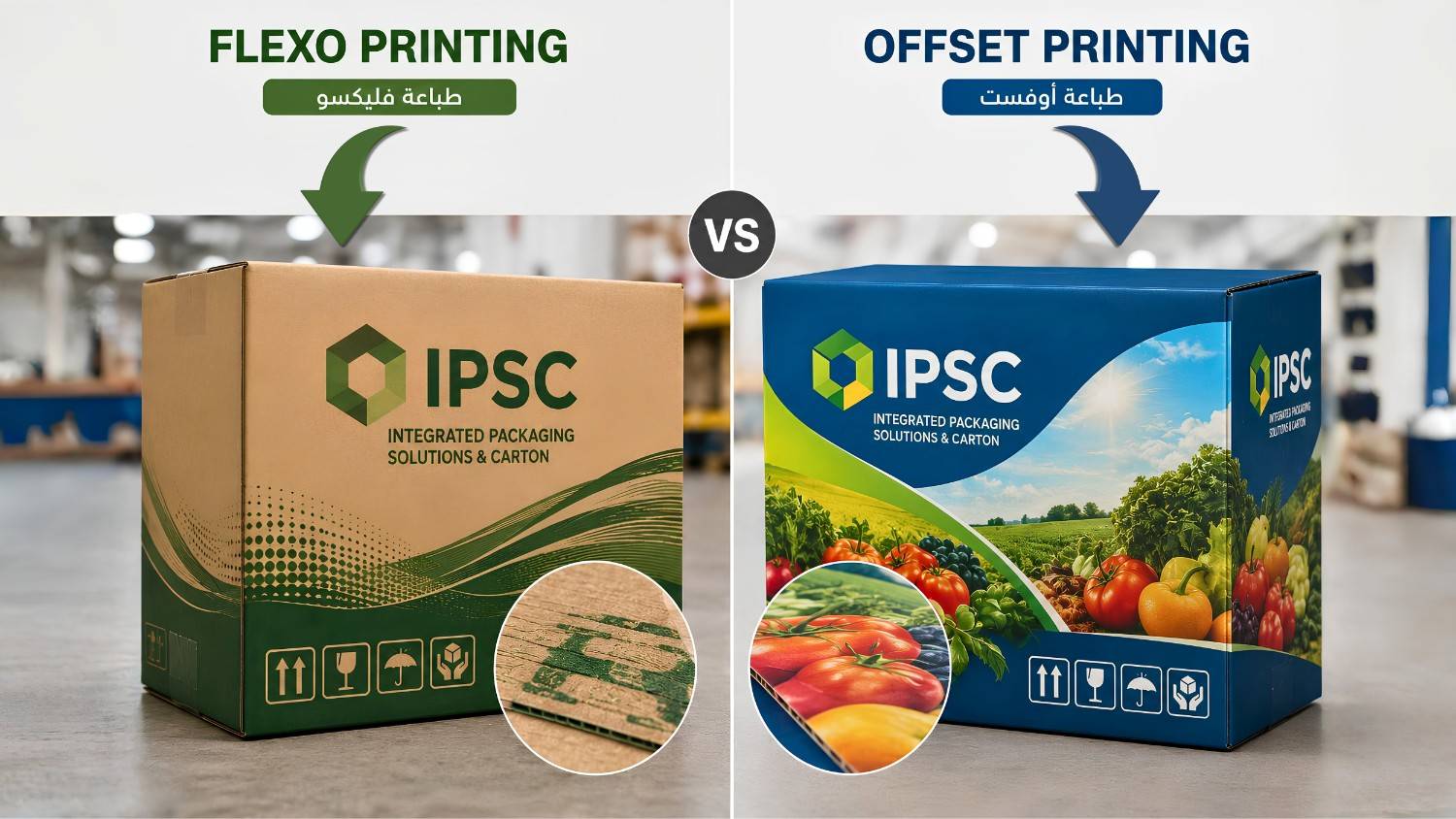
When manufacturing cartons and packaging boxes, choosing the right material and size is not the only important decision. The printing method used on the carton also has a major effect on the final appearance, production cost, and print quality.
Two of the most common printing methods used in the carton and packaging industry are Flexo Printing and Offset Printing. Each method has its own advantages and is suitable for different products and packaging needs.
In this article, we explain the difference between Flexo and Offset printing and how to choose the right option for your packaging.
What Is Flexo Printing?
Flexo Printing (Flexographic Printing) is one of the most widely used printing methods for corrugated cartons, shipping boxes, export cartons, and industrial packaging.
This printing method uses flexible printing plates to transfer ink directly onto the surface of the carton.
Advantages of Flexo Printing
- Suitable for large production quantities and continuous carton production
- Fast printing and production process
- Cost-effective compared to some other printing methods
- Suitable for direct printing on corrugated board
- Ideal for logos, text, symbols, and simple designs
When Should You Choose Flexo Printing?
Flexo printing is a good choice when you need:
- Large quantities of cartons or packaging boxes
- Shipping cartons or export cartons
- Simple designs with a limited number of colors
- A cost-effective packaging solution
What Is Offset Printing?
Offset Printing uses an indirect printing process where the design is transferred through an intermediate surface before being printed onto the packaging material.
It is commonly used when high print quality, detailed graphics, and strong visual presentation are important.
Offset printing is widely used for product boxes, retail packaging, and high-quality printed cartons.
Advantages of Offset Printing
- Higher print quality and better accuracy
- Clearer colors and finer details
- Suitable for photos and complex designs
- Gives the packaging a more professional and premium appearance
When Should You Choose Offset Printing?
Offset printing is a good choice when you need:
- Cartons and boxes for products sold directly to customers
- Premium packaging or a strong brand identity
- Detailed images and multiple colors
- Packaging where appearance and presentation are important
Quick Comparison Between Flexo and Offset Printing
| Feature | Flexo Printing | Offset Printing |
|---|---|---|
| Print Quality | Good | High |
| Production Cost | Lower | Relatively higher |
| Production Speed | Faster | Relatively slower |
| Large Quantities | Excellent | Good |
| Details and Colors | Good | Excellent |
| Suitable for Corrugated Cartons | Yes | Yes |
| Best Used For | Shipping, export, and storage cartons | Retail boxes, product packaging, and premium packaging |
How Do You Choose the Right Printing Method?
There is no single printing method that is always better. The right choice depends on several factors:
- Type of product
- Required packaging design
- Production quantity
- Budget
- Required print quality and final appearance
If your main goal is to reduce production costs while maintaining good print quality, Flexo Printing is often a suitable choice.
If the packaging is an important part of the product presentation and brand identity, Offset Printing may be the better option.
Conclusion
Choosing the right printing method for your cartons has a direct impact on the final appearance, production cost, and customer experience.
Understanding the difference between Flexo and Offset Printing helps companies make better decisions when producing custom cartons, corrugated boxes, and product packaging.
Choosing the right printing method from the beginning can help control costs and achieve better results in the long term.
