


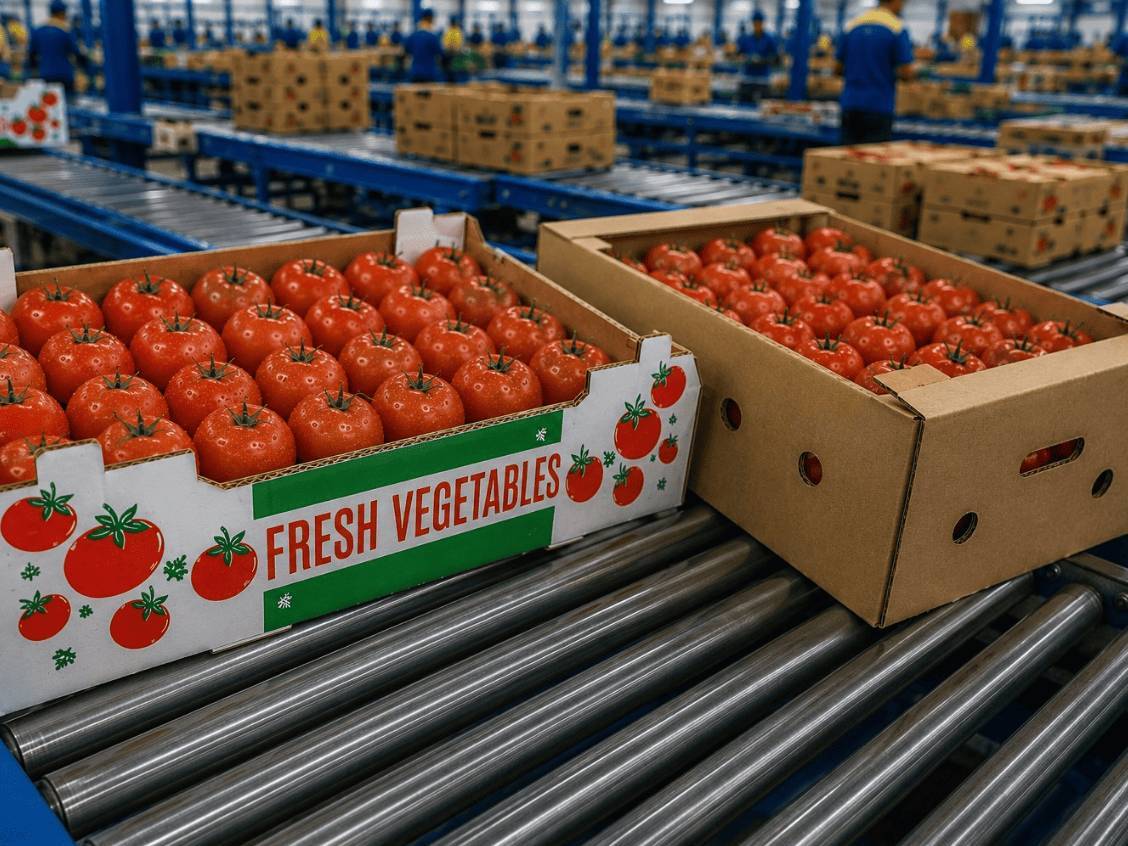
Fresh vegetables continue to breathe and ripen even after they are harvested. Because of this, choosing the right export carton is a critical step to keep your produce fresh during storage, transport, and shipping.
Export packaging is more than just a box to move goods. A well-designed carton protects the produce, minimizes bruising, maintains quality, and extends shelf life throughout the supply chain.
Strong & Moisture-Resistant Cartons
Vegetables are typically stored and shipped in cold storage and high-humidity environments. Standard corrugated boxes can easily get soggy and lose their strength when exposed to moisture, leading to collapsed stacks and damaged produce.
To prevent this, corrugated export cartons are manufactured using high-test liners and moisture-resistant additives (or waterproof coatings) to maintain their strength inside reefer containers and cold rooms.
A premium vegetable box must deliver:
-
High stacking strength (BCT - Box Compression Test): To withstand long-haul shipping.
-
Moisture and humidity resistance: To prevent the cardboard from softening in cold storage.
-
Zero bulging or collapsing: Ensuring safe vertical stacking on pallets.
-
Maximum transit protection: Safeguarding the produce from the packing house to the receiver.
Ventilation Design: Keeping Produce Fresh
One of the most critical features of an export box is its ventilation layout. Since fresh produce goes through a continuous ripening process, packing vegetables in a completely sealed box traps gases and moisture, which causes rapid over-ripening, rotting, and mold.
Export-grade cartons are designed with precision-cut air vents (vent holes) that allow cold air to circulate freely through the box.
Proper airflow helps to:
-
Slow down the ripening process to keep vegetables fresh longer.
-
Optimize cooling efficiency inside forced-air cooling systems and reefers.
-
Prevent condensation and moisture buildup.
-
Extend shelf life and maintain the firmness of the vegetables.
Market Tip: The size, shape, and placement of the vent holes are strategically engineered. When the cartons are palletized, the vents line up perfectly so airflow is never blocked.
Custom Packaging Built for Each Crop
In the packaging industry, there is no "one-size-fits-all." Different vegetables require different box structures:
-
Tomato Cartons: Require high ventilation to manage fast ripening and excellent top-to-bottom compression strength to prevent the bottom layers from getting crushed.
-
Pepper & Cucumber Cartons: Need a smooth interior finish to prevent skin scuffing, combined with balanced airflow.
-
Potato & Onion Boxes: Built as ultra-strong containers to handle heavy loads without tearing or breaking.
-
Leafy Greens (Lettuce, Spinach): Often require moisture-barrier coatings to keep the produce from drying out and wilting.
Choosing the right flute profile (like B, C, or double-wall BC flute) and box style ensures maximum protection and cost-effective shipping.
Why Partnering with the Right Carton Manufacturer Matters
Working with a packaging supplier who understands export standards is a game-changer for your business. Professionally designed cartons help you:
-
Drastically reduce arrival claims (due to over-ripening or damage) and product rejection rates.
-
Maximize pallet and container space (optimized box dimensions mean lower freight costs).
-
Meet international strict standards (like EU or Gulf agricultural import regulations).
-
Deliver "premium look" produce that commands higher market prices.
Today, an export carton is not just a container—it is a key tool for quality control and successful international trading.
Looking for Custom Vegetable Export Cartons? Get in touch to design packaging tailored to your specific crop, shipping route, and target market requirements for maximum protection and better arrivals.
