


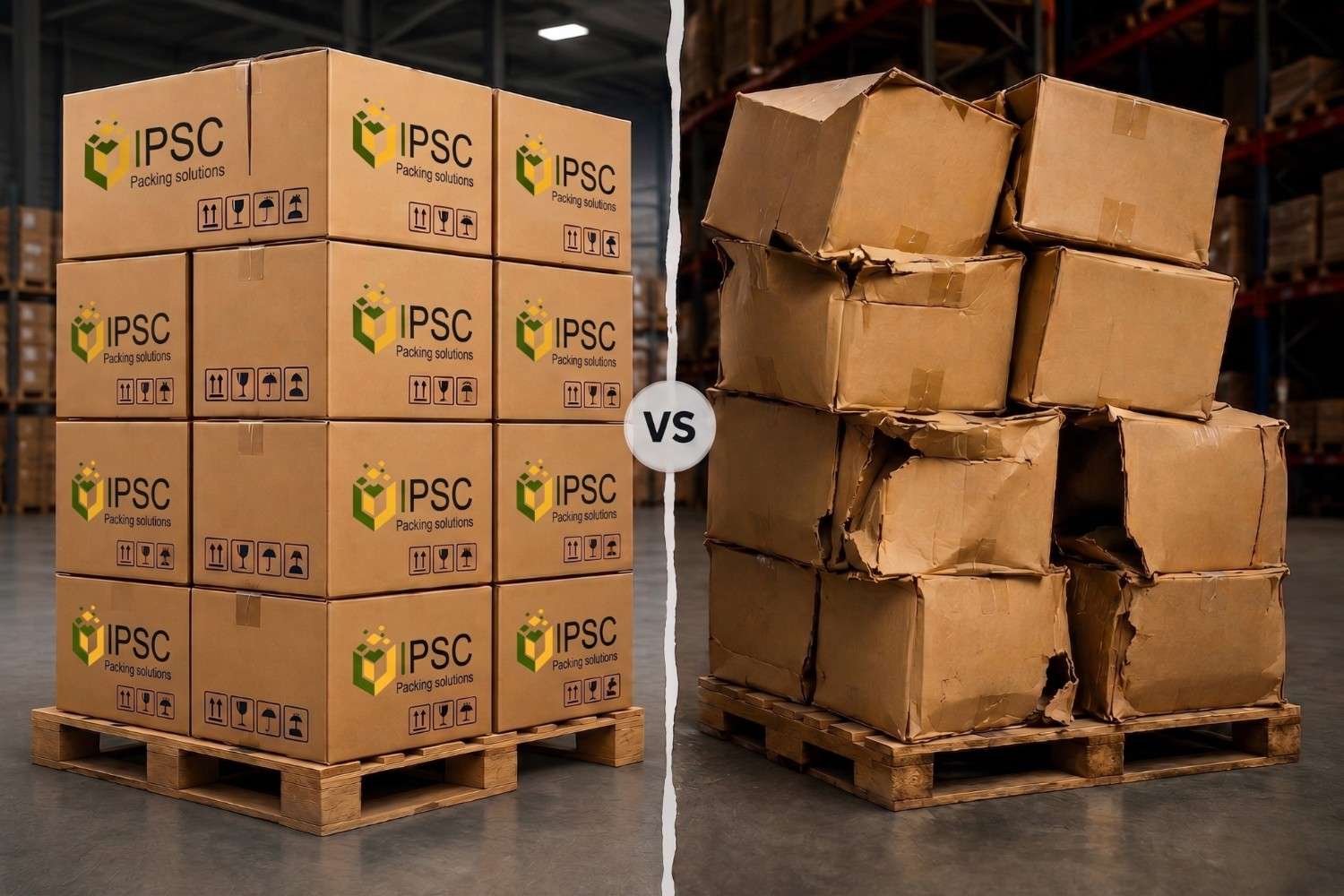
Many companies believe that product quality alone is enough to make sure items arrive in perfect condition. In reality, the right packaging plays a major role in protecting products during transportation and storage.
Whether your products are for the local market or export, choosing the right carton packaging solution helps reduce damage, lower return rates, and maintain product quality until delivery to the final customer.
In this article, we cover the most common packaging mistakes that lead to product damage during shipping and how to avoid them.
1. Choosing the Wrong Carton Box Size
Using cartons that are larger than the product leaves empty spaces inside the box, allowing the product to move during transportation and increasing the risk of impact damage. On the other hand, using a box that is too small may put pressure on the product and cause damage.
Solution: Choose carton box dimensions based on the actual product size, reduce empty space inside the packaging, and use internal protection materials when needed.
___________________
2. Using a Carton Type That Doesn’t Match the Product Weight
Not all products require the same type of carton. Heavy products, stacked goods, or export shipments often need strong corrugated cartons with higher load capacity.
Solution: Select the right carton thickness and number of layers based on product weight, shipping conditions, and storage requirements.
___________________
3. Ignoring Transportation and Storage Conditions During Packaging Production
Products may leave production in excellent condition but become damaged during loading, storage, or transportation because the packaging was not designed for real operating conditions.
Solution: Design shipping cartons and packaging solutions that can handle actual transportation and storage environments.
___________________
4. Poor Ventilation for Agricultural and Food Products
For products like fruits and vegetables, ventilation directly affects product quality. Insufficient airflow inside the carton can increase moisture levels and reduce shelf life. This is especially important for products packed in produce cartons such as tomato boxes and vegetable export cartons.
Solution: Use export cartons designed with proper ventilation to maintain product freshness.
___________________
5. Poor Weight Distribution Inside the Carton
When weight is concentrated in one area of the carton, pressure increases and the risk of damage becomes higher during shipping and storage.
Solution: Use internal packaging designs that distribute weight evenly and reduce product movement.
___________________
6. Ignoring Moisture Resistance in Packaging Materials
Moisture is one of the main factors that affects carton performance, especially during long-term storage and export shipping.
Solution: Choose carton materials with suitable moisture resistance based on the product type and storage environment.
___________________
7. Treating Packaging as Just a Visual Element
Packaging is not only about appearance or printing. A well-designed carton is an important part of protecting products, reducing losses, and improving customer experience.
Solution: Work with a carton manufacturer that offers custom packaging solutions, allowing you to choose the right materials, carton layers, and printing options based on your product needs.
___________________
Conclusion:
Product damage during shipping is not caused by transportation alone. In many cases, choosing the wrong carton or packaging system is the real reason behind damaged goods. Selecting the correct carton size, material quality, stacking strength, and moisture resistance can significantly improve product protection and reduce shipping losses.
Investing in proper packaging from the beginning costs far less than dealing with damaged products and customer returns later.
